What is grumbling? The seditious sin of grumbling Pt 1
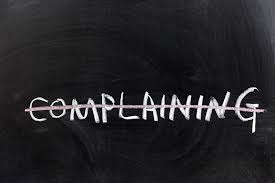
Early in 2007 Pastor Will Bowden of Kansas City realized his church had a chronic problem with complaining. (Welcome to the pastorate Will). He felt that the congregation was carping mainly about trivial issues—choice of hymns, informal dress code, and the like. So Bowden challenged his bleating sheep to a pledge: to stop for 21 consecutive days all griping, gossiping, and gainsaying. Those who accepted were issued little purple bracelets so that if they violated the pledge, they’d switch the bracelet to the opposite wrist and reset the count to zero. After months of self-muzzling effort, some folks were victorious and were rewarded with certificates of happiness conferred in church.
Two problems with Bowden’s idea I’d like to voice (irony aside)—are: first, that I didn’t think of it myself. Recognizing the insidious habit is half the battle won. And the second problem with a 21-day challenge is that it’s only 21 days. As insurmountable as three whine-free weeks sound, the challenge falls short of the Apostle Paul’s injunction to stop complaining… forever.
Prison may prove a fertile environment for growing gripes, but for Paul jail fed his praise. So it is without compunction that he curtly instructs the Philippian church to “ Do all things without grumbling or disputing ” ( Phil 2:14

).
Paul tended to be able to get away with all-compassing, life-altering sagacity by simply pulling back his overcoat to reveal the gleaming sword hilt of apostolic authority. But since I don’t pack that kinda heat, I need to draw the whole length and breadth of conviction out of the scabbard. So this week let’s examine the edges of sinful complaining, and next week we’ll ponder what makes it so heinous a sin.
1. THE SCOPE OF GRUMBLING
Phil 2:14

“ Do all things without grumbling or disputing.”
The scope of the command is breathtakingly panoramic: all things.
And no, the Greek affords no wiggle room. All things means all things. It is literally just as sinful to kvetch about trivial problems (like the weather, or traffic, or volume of the church music, or your spouse’s snoring, or the paucity of serious presidential candidates) as it is to vent about serious issues like the threat of terrorism, or the diagnosis of a terminal illness.
Does this mean that any and every observation about a negative situation is a sin? No, that’s not what Paul said to the Philippians…
2. THE SPECIES OF GRUMBLING
Paul mentions two species of complaint: grumbling and disputing. In Greek grumbling is the word γογγυσμwv / gongousmōn. It’s an onomatopoeic term that refers to indistinct sounds of muttering or murmuring. So forbidden grumbling is not lodging a respectful, reasoned argument of constructive criticism or appealing to authority. Rather gongousmōn contains the idea of spewing discontent and malcontent from a fomenting heart of dissatisfaction.

It’s the sound your kid makes when you say, “Clear the dishes and have a bath before you can watch TV.” He doesn’t have a reasoned argument as to why he shouldn’t do his chores; he just mutters and groans and in other ways communicates an unjustified attitude of discontent. If he had a real reason to object he’d make an argument: “Mom, I already had a bath and yesterday you said that it would be Suzie’s turn to clear the dishes.”
But we never have a legitimate reason to complain against God, because we have way more than we deserve!
The other species of complaint Paul forbids is disputing, or the Greek word διαλογισμός / dialogismos. This carries the connotation of evil motives in the sense of dispute, debate, and contention. It is not the word for civil dialogue, it’s the word for arguing, or what we call ‘back-chatting.’ This type of disputing falls short of an honest appeal for consideration, but connotes rather a wicked intention that challenges God’s authority. A finger in the face of God as you quarrel with providence.
Notice Paul’s standard response to this type of whining: “ But who are you, O man, to answer back to God? Will what is molded say to its molder, ‘Why have you made me like this? ’” ( Rom 9:20

).
Thus, grumbling and disputing is always wrong. But there is a word for good complaining: it’s the word δέησις which means to make known your particular need. It is found in Phil 4:6

“ Do not be anxious about anything, but in everything by prayer and supplication / δέησις with thanksgiving let your requests be made known to God. ”
This is Paul’s instruction to tell God what’s bugging you; it’s in the same letter where he says don’t grumble and dispute. So obviously it must be possible to express our feelings and needs and wants about a dissatisfying, irksome situation… without sinning.
Next week we will consider why grumbling is so seditious. Feel free to leave a response in the comments section (It’s not often that I feel comfortable inviting feedback to a blogpost!)