The Puritan Call to the Ministry
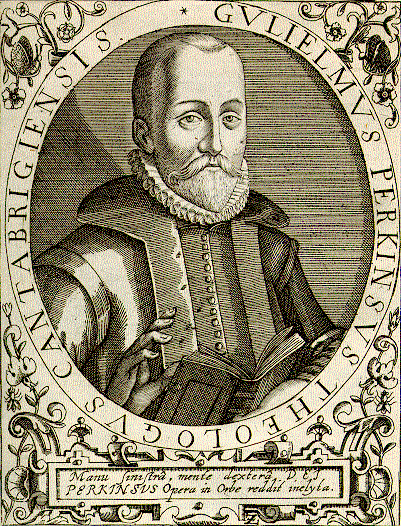
Rightly understood, the Puritans are known for captivating preaching, unwavering conviction, and towering godliness. God has left his people with a trove of shepherding-care from the pens and pulpits of Puritan ministers.
In a recent doctoral lecture on Puritan ministry, Dr. Sinclair Ferguson discussed how the Puritans understood God’s calling of a man to the ministry. Generally speaking, they considered these six characteristics in a call to gospel ministry.
- It is a sacrificial calling.
The Puritans understood that the call to ministry involved sacrifice. Some of them were well-paid in ministry, but most were not. According to Dr. Ferguson, estimates say that less than ten percent of churches provided a salary remotely commensurate with that of their non-ministerial peers.
The average Puritan did not possess a voluminous library. Though they put out much literature, many of them owned few books due to financial constraints. How were they so learned then? They gave themselves to their studies when resources were accessible to them. They became careful readers. It was similar to C.S. Lewis. He was once asked how he possessed so much knowledge. He responded, “Because when I was a student, I had no money.” When books were available to him during his schooling, he devoured (and remembered) them.
There were historical reasons that the Puritans understood ministry a sacrificial calling. Along with the Great Ejection in the 1660’s, England’s Five Mile Act in 1665 prohibited Puritan ministers from being within five miles of their places of ministry.
All of this, along with the normal rigors of ministry, the Puritans understand the call to ministry as a sacrificial calling.
- It is a divine calling.
The Puritans understood that the call to ministry as a sovereign summons of God. And yet, the call was not an unverifiable subjective hunch. They looked for several marks to discern God’s sovereignty in the calling.
First, the call consisted of a desire in the individual for ministry. In particular, there must be a desire for the great end of the ministry, namely, the glory of God in the salvation of sinners.
Second, the divine call would show in the individual’s use of biblical means in disciple-making. Prior to confirming his call, the individual must be already living a godly life and seeking to shepherd others. If an individual was not already doing so, they ought not consider themselves as presently called. For the Puritans, this served as a barrier for those who thought they were called but were not presently seeking the salvation of sinners.
Third, a divine call showed in the individual’s competence and giftedness for ministry. There must be some knowledge and understanding of the gospel along with some ability to edify others. Observation and investigation was used to discern this. The question might be asked, “Who is already being influenced in a biblical manner by the individual?” The Puritans believed that the impact of one’s gifts should be savory among God’s people.
- It is a privileged calling.
In Puritan thinking, the call to gospel ministry was considered an exalted privilege for a number of reasons. There was the privilege of constant exposure to God’s word. There was the privilege of serving as an undershepherd of the Lord Jesus Christ. There was the privilege of walking with souls in their pilgrimage. And there was the future privilege of reward.
- It is a dangerous calling.
Despite the aforementioned, the Puritans considered the call to ministry a dangerous calling. Hazards existed for the minister. There is the risk of studying Scripture solely to crank out a sermon. There is the hazard of studying merely for what you could do to others in ministry. Men ought to beware the danger of studying professionally. With this comes the peril of ministering to others but failing to nourish one’s own soul. Correspondingly, there was the danger of lording it over Scripture. Scripture then becomes an instrument one might use to lord it over others. The word that best goes forth from us is that word which we have received into our own hearts.
Today, some young men assume that they are called on the grounds that they love to teach. Teaching is critical. However, a man better evidences his call in a desire to teach because he loves the flock. The very nature is that teaching is to make one small. The ministry of teaching is fundamentally one of servanthood; unto Christ and the flock (cf. 2 Cor. 4:5

).
The Puritans considered Satan a further hazard to the ministry. They understood that no man was shot at more by Satan than a minister. If the devil can bring down a minister, he could do damage to an entire congregation.
- It is a learned calling.
The Puritans understood that the called man must be a man of biblical learning. A typical Puritan education consisted of Greek, Latin, Hebrew, and English, among other things. They understood Latin as an important part of theological education because most scholarly works in that day were written in Latin.
Though the Puritans were versed in a variety of subjects, the primary learning was to be biblical learning. To love learning something more than Scripture was a sign of unfitness for ministerial office. They were all essentially men of one book.
Training in doctrine and learning was the sine qua non of Puritan ministry. They took very seriously the command to accurately handle the word of truth ( 2 Tim. 2:15

). The ministry was no place for capricious handlings of Scripture. For that reason, the Puritans believed that a minister must be a competent theologian. Theology was a practical rather than a speculative science. This was not an end in itself. Reading doctrine and systematic theology was to strengthen them in the exposition of Scripture. Being a better theologian produces better pastors. Learning was not an end in itself, for knowledge puffs up. Rather, it became a tool in service to faithful biblical ministry.
A typical Puritan education for ministry had three stages. First, was the academic education, often at Cambridge or Oxford. Second, there was employment as a tutor. In this way, one’s educational training continued by providing instruction to children, during which he often also involved himself in post-graduate studies. Finally, there was an apprenticeship under a seasoned minister. This helped younger ministers refine themselves. The purpose was not to make uniform clones of man, but help him develop his God-given constitution and skills. However, it was also a proving ground, where seasoned men helped young men distinguish between premature zeal and ongoing perseverance. They noticed how easy it was to lose one’s first love. Along these lines, Puritan Robert Trail once said, “Continue in thy vigour, and painfulness, and diligence. Young ministers, that are sound and sincere before God, are usually warm and diligent in the first years of their ministry; and many do decline afterwards, and become more cold and remiss.”
- It is a call to a resident ministry.
There existed a form of ministry pluralism in seventeenth century England. Ministers would often be found ministering in multiple churches simultaneously. They might pay an underling (who might not know what he was doing) to conduct liturgy in one church while he ministered in another. For the Puritans, this resulted in the unacceptable phenomena of men who considered themselves ministers of a flock, yet were not resident among the flock.
Thus, the Puritans sought to establish godly resident among the flock. They understood that the wheels of ministry were oiled by contact with the people. The people needed a sense that “this man has been sent to us by God.” A man must be among the flock (cf. 1 Pet. 5:2-3

). If love of the people and care of people are of the essence of pastoral ministry, then residence among the people, and getting to know them, was a sine qua non of pastoral ministry. It is only actual knowledge of the people that enables the wise pastor to lead the people. This, in turn, fueled a strategic prayer life in the minister for the flock among him.
Conclusion
More could be said concerning the Puritan view of the ministry and the call thereto. Differing from the Church of England at the time, the Puritans understood the call to ministry not as an ambition of academic or clerical achievement, but the shepherding-care of the local church. In doing so, they sought to love the local church for the glory of her Savior, Jesus Christ.