The Christian and Tolerance
“For you, being so wise, tolerate the foolish gladly.
For you tolerate it if anyone enslaves you, anyone devours you,
anyone takes advantage of you, anyone exalts himself,
anyone hits you in the face.”
– 2 Corinthians 11:19–20

–
The Corinthians had a tolerance problem. Earlier in the chapter, Paul said something similar. “For if one comes and preaches another Jesus whom we have not preached, or you receive a different spirit which you have not received, or a different gospel which you have not accepted, you bear this beautifully.” They bear with false teaching. They tolerate the intolerable.
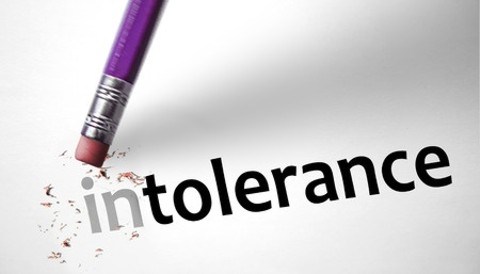
ARedefinition of Tolerance
In the last 10 to 15 years, the worldview of postmodernism has come to dominate the collective intellectual consciousness of western society. And perhaps the pinnaclevirtue of postmodernism is tolerance.
Now, contemporary postmodern tolerance is not what English-speaking peoples have always understood the word tolerance to mean. A person was judged to be tolerant if, though he held to his views strongly, believed them to be absolute truth, and believed just as strongly that all other mutually exclusive views were absolutely wrong, he nevertheless insisted that others had the right to disagree with his deeply-held convictions. He believed in his convictions unwaveringly, and even believed that everyone else should believe what he believed. But he didn’t demand agreement or try to coerce consensus. He tolerated the existence of differing opinions, even on what he believed was non-negotiable truth. The old view of tolerance was well-captured in the oft-quoted aphorism, “I disapprove of what you say, but I will defend to the death your right to say it.”
But the postmodern version of tolerance is of a totally different sort. To today’s culture, tolerance is no longer the idea that wrong views, though wrong, nevertheless have the right to exist and to be heard in public discourse. Now, you’re only tolerant if you believe that no position is any more or less true, right, or valid than any other view. In his book, The Intolerance of Tolerance, D. A. Carson explains the shift this way:
“The new tolerance suggests that actually accepting another’s position means believing that position to be true, or at least as true as your own. We move from allowing the free expression of contrary opinions to the acceptance of all opinions; we leap from permitting the articulation of beliefs and claims with which we do not agree to asserting that all beliefs and claims are equally valid.” (3–4)
And with that revisionist definition of tolerancecomes also a revisionist definition of in tolerance.Which is a big deal. Because there are few worse charges to be accused of todaythan being intolerant. Since tolerance no longer means tolerating the existenceof opposing views but instead asserting that all views are equally valid,intolerance is disagreeing with the notion that no one position is more true,valid, or trustworthy than another. If you insist that someone is unambiguouslyand unequivocally wrong about something, you are intolerant. You’re an uncharitable, arrogant bully. Perhaps evena bigot.
TheEmbrace of Self-Defeating Relativism

Do you recognize what the central philosophical underpinning of that worldview is? It’s relativism —the rejection of absolute truth itself. If no one claim is more true or right than any other, there is no such thing as absolute truth at all. And the postmodernists don’t dispute this. In 1995, the United Nations released what is called the Declaration on Principles of Tolerance, and in Article 1 on the meaning of tolerance, it asserts that tolerance “involves the rejection of dogmatism and absolutism.” As Carson says, one can’t help but observe that that assertion sounds quite a bit dogmatic and absolute!
And of course, that is the failure of all forms of relativism: relativism is hopelessly inconsistent, because the claim that there is no absolute truth is itself an absolute statement. If someone comes up to you and says, “There is no absolute truth!” just ask them, “Is that absolutely true?”
It is rationally baseless. Such a worldviewimmediately collapses under its own weight. And so Carson observes, “Under thenew aegis of this new tolerance, no absolutism is permitted, except for theabsolute prohibition of absolutism. Tolerance rules, except that there must beno tolerance for those who disagree with this peculiar definition of tolerance”(13). Ironically, but inevitably for all systems that are based on relativism,what is now called tolerance is actually what the world has always known asintolerance.
TheChurch Apes the World
And because the church inexorably imitates and apesthe foolish fashions of the world—always ostensibly as a misguided means ofattracting the world—contemporary evangelicalism has imbibed these veryredefinitions and philosophical presuppositions. So many professing Christians arescared to death to offend the sensibilities of the postmodern culture. Forthem, the worst thing in the world is to be called intolerant. And so what hashappened? They have subtly, maybe even in some cases unintelligibly, abandonedtheir commitment to the absolute truth of Scripture, in favor of being moretolerant of a “diversity of opinions.”
People rise up in the church and begin teaching doctrinethat does not accord with the pattern of sound words entrusted to us inScripture. Others stand up against that error and criticize it for not aligningwith biblical truth. Yet still other men push back against that and say, “Hey, let’s not be so rigid and dogmatic, OK? These folksare aiming to ground their teachings in Scripture; they just have a differentinterpretation than you do. Who’s to say that our interpretation is better thantheir interpretation? After all, the text isn’t all that clear anyway. Weshould hear them out. We should give them a platform. We ought to be tolerant of a diversity ofviews.”
This is what happened in the Corinthian church. Thefalse apostles showed up when Paul was miles away, and they began sowing doubtabout the integrity of his character and the truth of his Gospel among thebelievers there. And when the Corinthians first discerned that that was goingon, they should have risen up and rejected these men for the wolves that theywere.
But what happened? They flashed their ‘letters ofcommendation.’ They touted their Jewish heritage and connection to the Jewishchurch. They bragged on their eloquence and their strong leadership. Theyboasted in their high-priced honorariums, and their large fanbase, and the bevyof their ministerial successes. And the Corinthians were taken in! And sothey tolerated thesubtle deviations from the truth. And when those subtle deviations became moreobvious deviations from the truth, they tolerated those as well. And when thetoleration of little compromise after little compromise led to theirenslavement, their being devoured, and taken advantage of, and even physicallyassaulted—by these fools who preach another Jesus, and a different spirit, anda different gospel—they tolerated it.They bore it beautifully.
Jesus,the Intolerant
This text teaches us, dear reader, that there is alimit to biblical tolerance. There are certain things that we simply must nottolerate in the church. You say, “But Mike, wasn’t Jesus the supreme example oftolerance? He refused no one! He welcomed everyone to Himself!” Not exactly.
In Revelation chapter 2, Jesus commends thechurch of Thyatira for their deeds, their love, their faith, their service, andtheir perseverance. Whereas the church of Ephesus needed to repent and do thedeeds she did at first ( Rev 2:4–5

), Jesus said that Thyatira’s “deeds of lateare greater than at first” ( Rev 2:19

). But—as Kevin DeYoung has put it—thoughThyatira was loving, their love could be undiscerning and blindly affirming. Considerwhat Jesus says in verse 20: “But I have this against you, that you toleratethe woman Jezebel, who calls herself a prophetess, and she teaches and leads Mybond-servants astray so that they commit acts of immorality.”
Jesus is intolerant of Thyatira’s tolerance of errorand immorality! And He promises severe judgment for it. Verse 22: “Behold, Iwill throw her on abed of sickness, and those who commit adulterywith her into great tribulation, unless they repent of her deeds. And I willkill her children with pestilence, and all the churches will know that I am Hewho searches the minds and hearts.”
Friends, the Jesus of Revelation 2 is not the Jesus of postmodern leftism. The real Jesus is decidedly intolerant of false doctrine and moral relativism. And for those Christians, and churches, and ministries who compromise the Word of God in an effort to be more “tolerant” and more “affirming” than Jesus is—on whatever issue—they will find themselves under the judgment of the One whose eyes are like a flame of fire, whose feet are like burnished bronze ( Rev 2:18

), whose robe is dipped in blood, and who strikes down the nations with the sword of His mouth ( Rev 19:13

, 15

).
Truthis Intolerant of Error
Martin Luther said it well when he wrote, “I am notpermitted to let my love be so merciful as to tolerate and endure falsedoctrine. When faith and doctrine are concerned and endangered, neither lovenor patience are in order. … When these are concerned, neither toleration normercy are in order, but only anger, dispute, and destruction—to be sure, onlywith the Word of God as our weapon.”
Truth is intolerant of error. And we are not permittedto tolerate the preaching of error in the name of truth. Rather we are, 2Corinthians 10:5

, to “destroy speculations and every lofty thing raised upagainst the knowledge of God, and [to] take every thought captive to theobedience of Christ.”
Not by force, of course. Not by coercion. We understand that in a fallen world, the whole of which lies in the power of the evil one ( 1 John 5:19

), error must exist alongside the truth. As Christians, we do not seek, as some do, to outlaw from the public square every viewpoint but our own. We tolerate the existence of different ideas, and worldviews, and ways of life.
WeWill Not Bow
But behind the pulpit—in Christ’s Church—there is one rule for the lives of Christ’speople. There is one sovereignstandard that norms the thinking and the beliefs of the followers of Jesus, tothe exclusion of all others. And thatis Scripture alone. We must never so adopt the world’s notion of tolerance that we allow anything to rule our faith and practicebut the voice of our Good Shepherd as spoken in His Word. We bow to Him alone.
John MacArthur has said it well:
Christ is our King. Scripture is our law. And in ways that have not been true in the past, Scripture and the laws of our country now collide head on. And we’re going to feel it. We are the target now. […]
I ran through my Bible the other day, just looking for everywhere I could find the term “bow down.” It’s all over the Old Testament. […] Unfaithful people bowed down before idols and godless kings. But faithful people did not bow down. Mordecai did not bow down. Daniel did not bow down. His friends did not bow down. Jesus did not bow down. Paul did not bow down.
These are going to be very challenging days. But we will not bow. We will be gracious, and we will be loving, but we will render to God what is God’s.