The Chariots of Israel and his horsemen
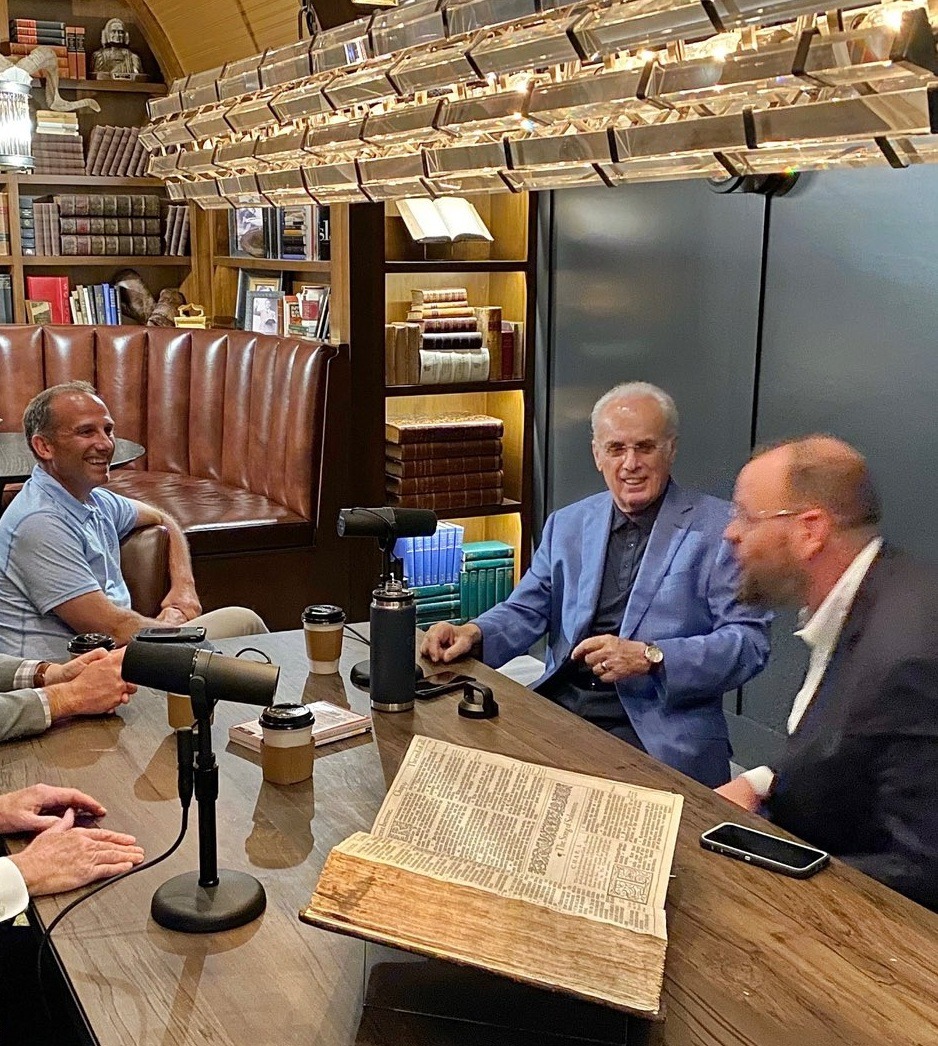
I met John MacArthur in 2001 when I moved to Los Angeles to attend the Master’s Seminary. Soon after I joined Grace Community Church, and Dr. MacArthur became to me Pastor John. He was officially my pastor for the next 12 years, but in many ways has been my functional pastor ever since.
John was, of course, a worker. He labored in the text, and he labored in the pulpit. He was a strategic thinker. He understood how to lead, and how to communicate in order to help people know the Scriptures better. He was always working, and his energy and intensity were contagious, resulting in an unusually productive church, as people were constantly laboring on conferences, shepherding, and Bible studies. Of course, every worker’s goal is to please the Lord, but honestly the staff at Grace was also working to please him. I know I was.
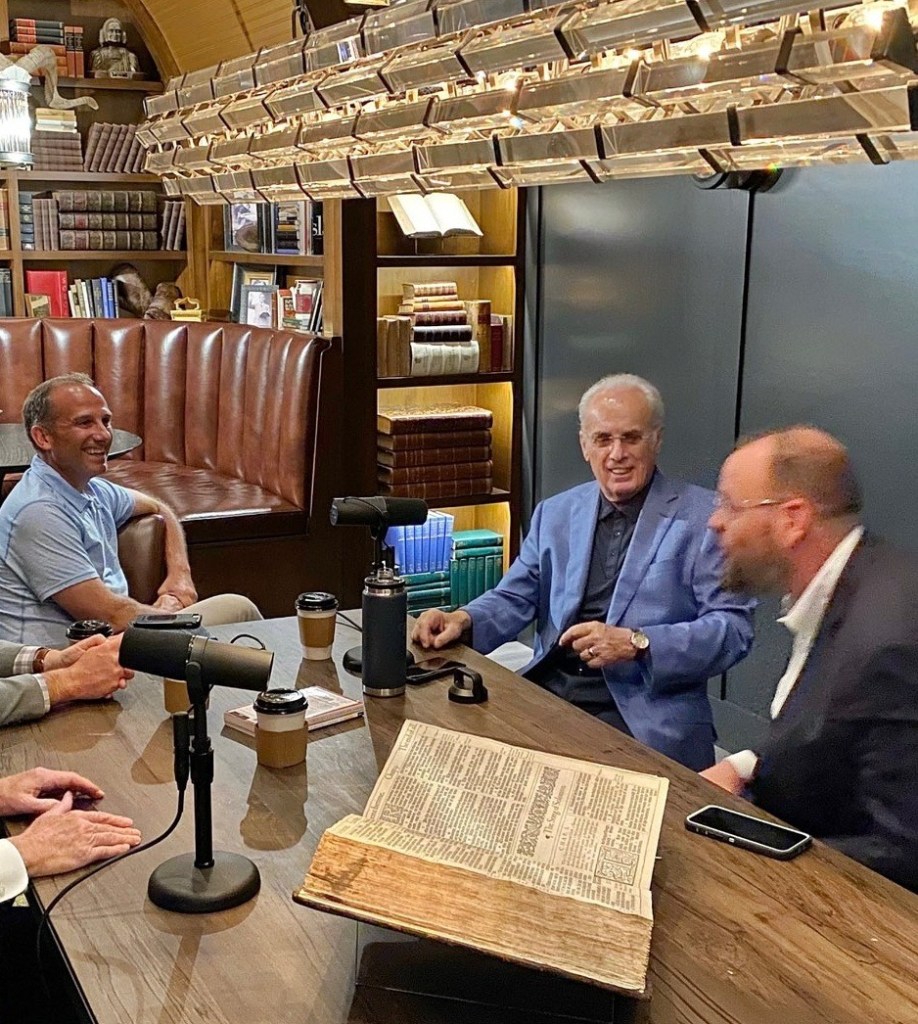 My last picture with Pastor John–although I’d seen him several times since then, this is how I want to remember him: an open Bible, full of energy, and joy in the Lord.
I experienced his work ethic first hand through his books. Pastor John and I co-edited several resources together, but our first was a book on Evangelism. He didn’t use a computer, so he would write out his chapters longhand. I’d type them up, print it out, put the manuscript in a binder, and hand it to him. A day or two later that binder would come back filled with handwritten edits, entire new sections to decipher, and cross references all over the place (John quipped that, at minimum a Christian book needed more cross references than pages, and you could tell how good a book was simply by the number of biblical references it had). I’d make the changes and give him a new notebook with the updated text. This cycle went on and on for months until he finally told me, “every time you give me the notebook, it is going to come back covered in ink. So the moment you are happy with it, send it off.”
Pastor John approached life like he edited books. There was always work to be done. From my perspective, he simply never rested. He did hospital visits, weddings, and funerals. Others have shared what I have experienced—numerous times I’d hear of a church member in the hospital, and go to visit, only to find out that Pastor John had already been there.
When I was overseeing evangelism at Grace Church, John told me “if I ever see you in your office, I’ll assume you are not doing your job.” I was grateful for that kind of clear instruction, and it led me to become a chaplain for the Los Angeles Sherriff’s department. Pastor John loved to go with me to visit jails and to do devotionals at deputy’s roll call. He delighted in being around people who wanted to hear the Bible.
His work ethic is what shooed me out of my office at Grace, and onto the streets for evangelism. It is also what compelled me to leave Grace Church to pastor in Washington, DC. His advice to me before I left was simple: “Hold your love for Christ firmly, hold your call as a pastor tightly, but hold everything else in ministry loosely—you never know what the Lord is going to do.” He told me to start an evening service. Why? “Because you will double your preaching output, and the more you work in the Word, the deeper the well gets, the more you will have to draw on throughout your ministry.”
There is no shortage of stories about Pastor John’s impact around the world. But I have seen it first-hand in the congregation I pastor, where our connection to John MacArthur’s legacy is everywhere. Our worship center was literally modeled off of the worship center at Grace Community Church. It is more than architecture—we host a location of The Master’s Seminary, and twelve of our staff are either students or graduates of TMS. Countless members are here because of our connection to Pastor John—so much so, it is hard for me to imagine church without him.
When Elijah left this world, Elisha lamented My Father! The chariots of Israel and his horsemen!(2 Kings 2:12).This was his way of mourning the fact that God took his prophet out of this world. Elijah had lived a full life, but was simply unable to retire. He was going to keep working as long as the Lord left him on earth, and—if you were to ask Elisha or the school of prophets—that should have been forever. They honestly never would have gotten to a place where they would have thought it was appropriate for Elijah to leave them. Hence the lament: The chariots of Israel and his horsemen!
Then Elisha asked a very basic question: Where is Yahweh, the God of Elijah?
The answer came in the rest of the chapter (2 Kings 2). Yahweh was present in the school of the prophets, and in those that served the Elijah’s God. While it seemed far-fetched to Elisha at the time, the truth is he would end up doing more miracles than Elijah.
I’m sure it sounds silly for those outside of the Master’s and Grace Church world, for me it is hard to contemplate a world without Pastor John—a world where I can’t text him questions, or ask his advice. I know the leadership of The Master’s University and Seminary has done all they can do to prepare for that world. We have trained as many people as we could, and have sent them out all around the globe. For his part, MacArthur often said that replacing Christian leaders is like a person taking his hand out of a bucket of ice water. Its impossible to leave a hole, God just fills in the space in his own providential way.
Every Christian will reign with Jesus over the nations (Revelation 2:27–28). I can’t imagine the joy that John has in seeing the Lord, and experiencing the beatific vision of which he often preached. His example of faithfulness casts a long shadow in this life—a shadow that remains even though he does not.
The chariots of Israel and his horsemen!