Lloyd-Jones: Make room for the cross
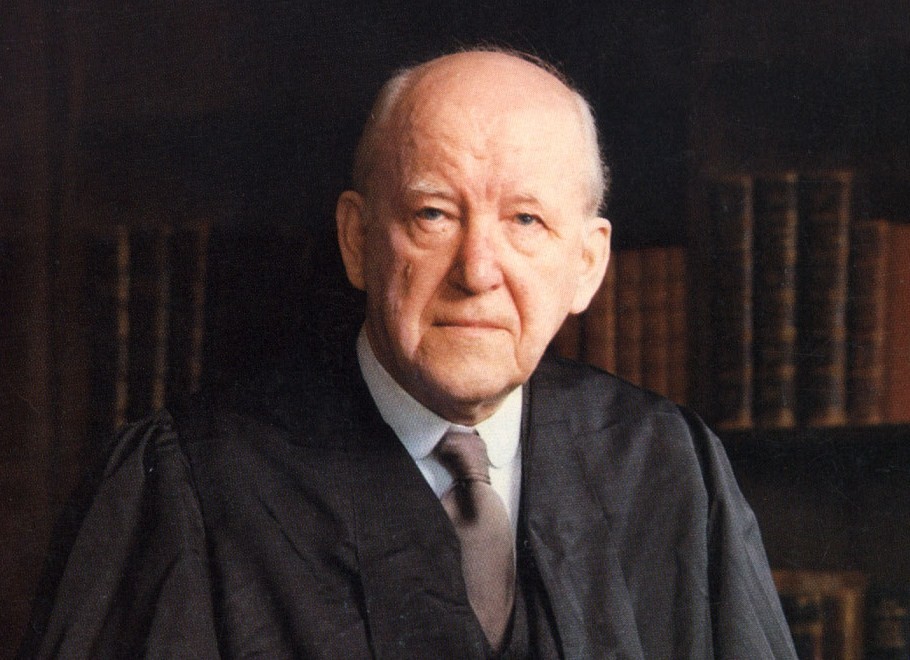
Dr. Martyn Lloyd-Jones was a Welsh pastor whose preaching electrified England. Some claim he was the most powerful expositor of the last century–a sentiment he did not share; at the end of his career he famously remarked, “I can say quite honestly that I would not cross the road to listen to myself preaching.”
But plenty of people did cross the road to hear Lloyd-Jones preach, among them a young, 22 year-old J.I. Packer. Reflecting on the year he first attended Westminster Chapel, Packer wrote, “I never heard such preaching. It came to me with the force of an electric shock, bringing me more of a sense of God than any other man.”
I heartily agree. Lloyd-Jones, perhaps more than any other preacher of the past, has influenced the way I think about God, the church, the task of preaching, and especially the centrality of the Gospel. I have felt the electricity and owe him a tremendous debt.
But his preaching wasn’t always electrifying. Something happened to Lloyd-Jones early in his ministry that changed him forever—and I believe there’s a lesson here for all of us.
His biographer writes that when he was a young man in the late 1920s Lloyd-Jones preached one night at a church in South Wales. Following the service, a retired minister pulled the young preacher aside and challenged him with a gentle but stinging critique. Lloyd-Jones never forgot his words:
“…the Cross and the work of Christ appear to have little place in your preaching.”
Now, as a preacher, let me try to convey the force of hearing those words after finishing your sermon. Unsettling would be an understatement. Crushing. Devastating. Leveling.
I would rather someone inform me I forgot to wear clothes. That would be far easier to receive than what Lloyd-Jones heard.
- It would be like telling Ben & Jerry they don’t care about ice cream.
- Or accusing a photographer of not loving pictures.
- Telling a writer that words don’t seem to be very important to him.
- Accusing a NASCAR driver of loving racing but not cars.
You get the point. To a preacher, that’s saying “You’ve missed the entire point of your calling. You’ve missed the entire point of the Bible! Your preaching is powerless.”
That old man was telling Lloyd-Jones, “You don’t preach the Gospel very clearly.” Knife deep into the heart, and twisted.
So, what did he do? What would you do? Dismiss the critic? Ignore the challenge? By God’s grace, Lloyd-Jones did neither. He didn’t take it personal but he did take it serious.
Lloyd-Jones never went to seminary, but he had a hunger to learn and grow in his understanding of theology. He went to his favorite bookstore and asked for the two standard books on the Atonement. He denied himself food and sleep until he finished both volumes. It concerned his wife, who thought “the doctor” was ill.
But he was far from sick. Lloyd-Jones would emerge from his study a new man with a more complete and healthy understanding of his life, ministry and preaching.
He reappeared and announced that he discovered “the real heart of the Gospel and the key to the Christian life.” So…drumroll. What was it that Lloyd-Jones discovered in his study late that night? What’s the key to the Christian life? The Cross.
The Death of Christ is the key, not only to entering the Christian life, but living it abundantly. James Denney, author of one of the books Lloyd-Jones purchased said the Cross was “The hiding place of God’s power and the inspiration of all Christian praise.” Dietrich Bonhoeffer called it “The Center.” Jared Wilson compares the Cross to “divine smelling salts.” John Stott says the Cross is where “We shrink to our true size.” The Cross is our center of gravity. It’s everything.
If that sounds anticlimactic and maybe a little boring, you’re in company—but it’s not good company. Scores of Christians, including preachers, find it easy to put politics, education, the family, the church, their ministry—and sadly—even themselves at the center. Those are all powerless, dangerous counterfeits. Thankfully, Martyn Lloyd-Jones discovered that early in his ministry rather than later. It was the merciful providence of God.
From that point on, no matter where he was or who he was addressing, Lloyd-Jones made the Cross the center-piece of every sermon. He was truly Gospel-centered before it was a hashtag. The message of Christ’s finished work found its way into every sermon—not just as an awkward conclusion, dutifully tacked onto the end, but a clear feature. Like Paul, thousands of years before him, Lloyd-Jones was determined to know nothing “except Jesus Christ and Him crucified.” And God did something amazing through his ministry: he helped people, both Christians and non-Christians.
To this day, after reading or hearing a Lloyd-Jones sermon, I walk away with the same response, tremendously helped. And I’m not alone. Most of the men with an effective pulpit ministry—at least the ones I encounter—have been influenced in some measure by Lloyd-Jones. It’s no accident that more people attended the Sunday evening service at his church than the morning. It was traditional at Westminster for the evening service to be more evangelistic. In other words, desperate people knew where to find help and power. “Go hear the doctor on Sunday night and you’ll hear the Gospel.” His ministry exploded and low-hanging fruit appeared everywhere in the lives of those who sat under his preaching.
Now, you may be reading this and thinking: That’s a nice story for preachers. But what’s that got to do with me? I’m glad you asked. It has everything to do with you!
Whether you’re a preacher or a soccer mom, a believer or an unbeliever, this is revolutionary. You see, Lloyd-Jones had little place for the cross in his preaching (back then), and consequently, it was weak and ineffective. But…
Maybe you have little place for the cross in your parenting, your marriage, your friendships, your career…your life.
You and I need power—lots of it. We need power to fight against sin and overcome temptation; to combat worldly thinking and pursue purity; to love our spouse and train up our children; to suffer well and obey Christ; to defend the faith and fulfill the great commission. We need help from an outside power.
The Cross is the only place we find the kind of power needed to flourish as a child of God. But don’t take my word for it. Listen to the Apostle Paul. To a messed-up church that desperately needed strength and wisdom, Paul wrote, “The message of the Cross is folly to those who are perishing, but to us who are being saved, it is the power of God.” 1 Cor. 1:18

. Did you hear that? The Cross is not about power. It is power. In fact it’s the power. That’s why Paul boasted in it. And that’s why he was ridiculed and eventually killed. The Cross.
Pretty unimpressive, isn’t it? Not philosophy, politics, moral effort, or nuanced ethics. Just the Cross. The place where need meets provision. That’s the message. That’s what distinguishes Christianity from every other false religion in the world. Religion says “do.” Christianity says “done.” Or, as one of my heroes John MacArthur says so eloquently, “The Cross is about Divine accomplishment not human effort.” Amen.
Learn the lesson from Lloyd-Jones and learn it early. Make room for the Cross. It looks weak, foolish and unimpressive. But hidden in the Cross is a strange, mysterious power. It fosters courage while it produces humility. It “shrinks us to our true size” but makes us “bold as lions.” To preach it and believe it is to access “the hiding place of God’s power.” Make room for the Cross.