America’s Newest Religion
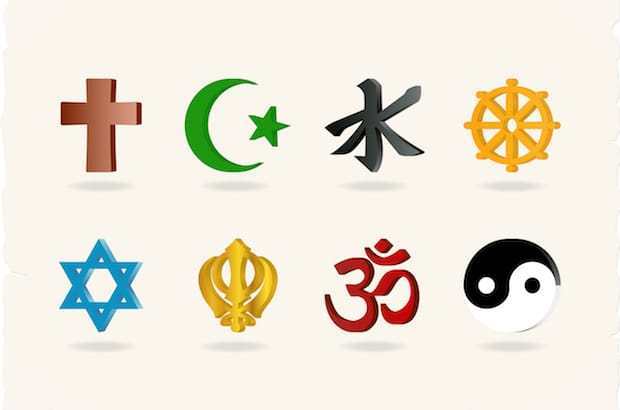
These recent days have been sorrowful ones. The curse of the Fall has been three-dimensional in painful ways. Lives have ended that should not have. The great intruder of death has reared its ugly, uninvited head. Equally uninvited, has been financial ruin, physical injury, destruction of property, anxiety, fear, emotional distress, closure of stores and services, not to mention the virus. Truly these last few months have been replete with thorns and thistles. Some have experienced immense pain. Thankfully, our God is the Father of mercies and God of all comfort, who gives great hope of Jesus Christ, he who will right all wrongs.
A few months ago, it was mentioned here that Critical Race Theory and Intersectionality (CRT/I) collectively, was being embraced by many within professing Christianity. At the 2019 SBC Convention, for example, it was insisted that CRT/I was merely a tool alongside biblical Christianity for the purpose of understanding cultural-sociological issues. However, as many proposed, CRT/I has proved far more than a mere tool subservient to biblical Christianity. That fact has become more clear in these most recent days. Rising up from the recent sorrowful events, we have seen what many understood, and warned of: Critical Race Theory and Intersectionality is not a tool, but an entirely separate religion. One could argue that it is America’s Newest Religion.
Even Atheist author James Lindsay wrote at length, arguing that CRT/I features the tenets of an independent religion. Mike Nayna writes, “I’ve seen more direct public discussion recently about the religious aspects of anti-racism. This rabbit hole goes much deeper than you would imagine, right down to the reemergence of a new kind of special revelation within certain corners of academia.”
Every religion has common, general features. Each proposes things like an absolute, a view of humanity, the problem of humanity, a corresponding salvation, some community ethic, and more.
To begin, we will look at what CRT/I teaches on humanity and the corresponding problem.
Humanity and the Problem
Every religion holds to a particular idea concerning anthropology and hamartiology. CRT/I proposes an anthropology which categorizes humanity into two primary groups; oppressor and oppressed. This is the anthropological lens through which human beings are viewed.
The oppressors are those whose primary sin is racism. The oppressed are the victims of both direct and indirect sins of racism. Racism could be defined as “a belief that race is the primary determinant of human traits and capacities and that racial differences produce an inherent superiority of a particular race” (merriam-webster). However, a Harvard essay, “ Sociology on Racism,” by Matthew Clair and Jeffrey S. Denis, broadens the definition of racism to “individual- and group-level processes and structures that are implicated in the reproduction of racial inequality.”
CRT/I teaches that the oppressor category is guilty of racism both by nature and action. First, the oppressor category is said to be inherently racist due to whiteness. In other words, the oppressors are guilty of racism by virtue of lighter skin shade. CRT/Is confess to this. Robin DiAngelo says, “The challenge I want to offer my fellow white people is changing the question from ‘if’ to ‘how?’ I want to change the question to, ‘How is racism manifesting in my life?’ None of us can be and none of us are exempt from its forces.” She continues, “As a result of being raised as a white person in this society, I have a racist worldview. I have a deep racist bias. I have developed deep racist patterns. I have investments in the system of racism because it has served me really well.” Ekemini Uwan, from Sparrow Women, said at the Dallas Evangelical Conference, “The reality is that whiteness is rooted in plunder, in theft, in enslavement of Africans, in genocide of Native Americans.” Richard Delgado and Jean Stefancic write, “Many critical race theorists and social scientists hold that racism is pervasive, systemic, and deeply ingrained. If we take this perspective, then no white member of society seems quite so innocent.” Therefore, the original sin of racism is inherent to being white.
Second, there is the original sin of privilege, sometimes expressed as “white privilege.” In a 2002 essay, Francis E. Kendall defines white privilege as:
an institutional (rather than personal) set of benefits granted to those of us who, by race, resemble the people who dominate the powerful positions in our institutions. One of the primary privileges is that of having greater access to power and resources than people of color do; in other words, purely on the basis of our skin color doors are open to us that are not open to other people.
According to CRT/I, whiteness renders an individual inherently in a category of privilege over individuals outside of whiteness. For CRT/I, this is a sin requiring repentance.
Third, the oppressors can be guilty of racism by specific actions.
The idea of Intersectionality creates additional sin. It furthers CRT’s general duality of oppressor and oppressed by claiming that certain oppressed people are more oppressed than others based on their various identities. A black woman who also identifies herself as a lesbian might be more oppressed than a heterosexual black woman. Therefore, a white heterosexual male would be the furthest from righteous, thus possessing the most inherent depravity.
Similarly, CRT/I teaches that the oppressed are victims on multiple grounds. First, they are inherently victims by nature of the innate privilege of the oppressors. Second, they are victims due to the inherent racism of whiteness. Third, they are victims by specific acts of racism by the oppressors.
The Solution/Salvation
Each religion proposes a solution which corresponds to the problem. This is typically referred to as salvation. CRT/I teach a separate salvation for the oppressor and oppressed.
The oppressors need salvation on multiple grounds. First, they need salvation from their sin of racism inherent to whiteness. To be clear, this does not concern acts of racism, but racism by virtue of being white. From that salvation is needed.
Second, oppressors need salvation from their white privilege. They must confess and repent of this sin, of which one is guilty on the grounds of whiteness.
It could be said, further, that non-white individuals who do not ascribe to CRT/I anthropology and hamartiology also need salvation. They need salvation, not from whiteness, but from their ideology. Often these anomalistic individuals are outcasts of the CRT/I community (and there are many).
Salvation for those in the oppressor category is near impossible. Like biblical Christianity, CRT/I holds to a standard of righteousness that is unattainable (e.g. “You shall be perfect as your heavenly Father is perfect,” Matt. 5:48

). Unlike Christianity, however, CRT/I provides no grace by which righteousness may be imputed by faith (c.f. Rom. 3:21-26

). One cannot work themselves out of whiteness. There is no system of justification by faith. There is no redemption through the work of a substitute. There is no just forgiveness through the propitiatory work of another.
Like biblical Christianity, CRT/I holds that those with original sin must experience a change of nature to escape their depraved condition (e.g. “we were by nature children of wrath,” Eph. 2:3

). Unlike biblical Christianity, CRT/I provides no power or ability for a supernatural, new birth out of one’s inherent, natural predicament (cf. John 3:3

, 2 Cor. 5:17

). It’s impossible. You cannot be objectively reborn out of whiteness or privilege.
Like biblical Christianity, CRT/I holds to an individual’s inherent uncleanness due to the stain of original sin (cf. Jer. 2:22

, Isa. 64:6

). Unlike biblical Christianity, however, CRT/I provides no impeccable substitute or method by which the stain of original sin can be permanently cleansed (cf. Heb. 9:22

). You cannot be cleansed by the stain of whiteness.
Like biblical Christianity, CRT/I holds to an individual’s dominion under a sinful, guilty family and race (e.g. “In Adam all die,” 1 Cor. 15:22

). Unlike biblical Christianity, CRT/I provides no ability to be transferred out of that guilty family and adopted into a righteous one (cf. Eph. 1:5

, Gal. 4:6-7

). You cannot be adopted out of whiteness.
Unlike biblical Christianity, CRT/I provides no objective, historical basis of hope for eternal life in a sinless, sorrowless, deathless world. That is what sets the truth of biblical Christianity totally apart. God incarnate, the Lord Jesus Christ, lived an impeccable life in the midst of colossal racism and injustice ( John 1:14

, Heb. 4:15

). He only loved and submitted himself in self-renouncing humility under God the Father ( John 8:29

, Phil. 2:5-8

, 1 Pet. 2:23

). Then, he willingly subjected himself to the most crooked trial in history ( Matt. 26:57-68

). From there, he proceeded to be silent as he was whipped, scourged, and mocked by people whose hearts, lungs, lives, and families he sustained ( Isa. 53:7

, Col. 1:17

). In breathtaking humility and glory, Jesus allowed himself to be crucified for the sins of all who would put faith in him ( John 10:15

, Phil. 2:5-8

). God the Father imputed the sin of all who trust in him to Christ—our sin is objectively punished, cleansed, and forgiven through the righteous Substitute ( Rom. 3:25-26

). His righteousness is imputed to sinners who put faith in him; a real righteousness ( 2 Cor. 5:21

). He died for our sin ( 1 Cor. 15:3-4

). Finally, Christ rose bodily three days later to demonstrate that he is the historical, object source of salvation ( John 11:25-26

, Rom. 4:25

). This is something that CRT/I can never offer. Theirs is a hopeless gospel (cf. Gal. 1:6-9

).
Thus, the CRT/I gospel becomes one, not of salvation from the wrath of God and the presence and power of sin, but from the oppression/oppressor categories. Consequently, CRT/I becomes a different gospel than that of the substitutionary atoning work of Jesus Christ (cf. Gal. 1:6-9

).
As my brother-in-law observed, the CRT/I version of Matthew 11:28-30

could be, “Come to me, all who are weary and heavy-laden, there is no rest here. Take my yoke upon you and learn from me…and you may find self-actualization for your souls. My yoke is unbearable and my burden is crushing.”
CRT/I’s is an impossible standard of righteousness.
The oppressed category also need salvation. First, they are victims of sociological ills and oppression from which salvation-rescue is needed. Second, they need salvation out from under the privilege held by whiteness.
Liturgy and Worship
A resemblance of liturgy and corporate worship seems to have recently emerged from CRT/I. Cities across the country seem to have gathered for a form of worship. Some have observed that this resembles a form of medieval self-flagellating repentance.
The Absolute
Every religion proposes some absolute which is the highest object or concept. A religion’s absolute is that from which its principles, standards, and practices derive. The absolute in a religion is the most important object or concept. It is the focal point of a religion and the reality upon which all else depends.
For CRT/I, the principles and standards of righteousness derive from its adherents, as it proposes no formal deity. CRT/I authors define and clarify sin and righteousness within the movement. Thus, the movement’s devotees are its own absolute. And nothing is more catastrophic than when a system’s own adherents are its own absolute.
Community Interaction and Scholarship
Each religion typically interacts within itself in order to communicate and clarify its ideas. Some religions have things like seminaries, commentaries, scholars, and conferences.
CRT/I has produced much material. An examination of it will not be given. However, it needs to be said that, as Neil Shenvi has observed:
One of the most dangerous aspects of critical theory is its insistence that…oppressor groups claim to be appealing to “reason” or ”evidence” but these claims are merely attempts to justify their privilege and oppression. Moreover, people from oppressor groups are blinded by their privilege and need to defer to, learn from, and accept the claims of oppressed people, who have special access to truth.
Similarly, Margaret Anderson and Patricia Hill Collins write, “The idea that objectivity is best reached only through rational thought is a specifically Western and masculine way of thinking – one that we will challenge throughout this book.”
Only those from outside of the “oppressor” category are qualified to speak on the issues. Thus, white heterosexual males would be less qualified, if not disqualified, from speaking on the issue. This prejudice, of course, is ironic, and a violation of God’s kind of love (cf. Lev. 19:15

, Ps. 119:100

, 1 Tim. 5:21

, Jas. 2:1

).
Glorification and Heaven
Each religion proposes some sort of finish line, or end goal. Some religions call it heaven; some nirvana; others utopia. In general, this is a point of glorification and state in which a religion’s adherents’ place their hope.
For CRT/I, the glorification point seems to be a state in which one is neither oppressor or oppressed. The oppressed seem to hope to rise out of being oppressed. Oppressors need to be glorified out of the oppressor category, though this is impossible for the most part. There exists no salvation, and thus, no glorification for them.
Conclusion
More could be said as it concerns the new, rising religion of Critical Race Theory and Intersectionality. Over the past few weeks, CRT/I’s rise has spoken loudly.
Despite an apparent desire to help some individuals, CRT/I will do more harm than good. It imposes and perpetuates a victim mentality. It fuels that from which we truly need salvation; self-righteousness and divisiveness towards other humans. It does not extinguish, but spreads racism. Instead of providing unity with others, it further divides. Instead of breaking down barriers that the gospel destroys, it resurrects them.
CRT/I seems to be a fast-growing system. Why? Maybe because it appeals to our fallen nature. On the one hand, most people are worse than you. Most of the problems in society are someone else’s fault, not yours. On the other hand, you can apologize and ask forgiveness for things you didn’t do. This also appeals to the fallen nature while simultaneously giving man his inherent, fallen buzz for religion.
Whatever the case, in no way can CRT/I be considered a mere tool used to assist other religions in anthropological and sociological understanding. This is its own, exclusive system that may welcome adherents to other religions in the door, but they must leave that religion at the door. Like a virus, CRT/I will enter and destroy a religion from which it receives hospitality and continue to spread.
Christians who continue to attribute tool-status to CRT/I could find themselves in a spiritually catastrophic state. CRT/I has emerged far beyond tool-status. Devotees of other religions, including biblical Christianity, will have to choose one or the other, but in no way can they choose both.
Whether or not CRT/I will evolve into a more organized religion remains to be seen. In either case, out of the sorrowful events of recent days has rapidly arisen America’s newest religion.